Category Archives: Neat Things I Didn’t Author

Ubi Primum: On the Duties of Bishops

The Papal Encyclicals

An encyclical, as defined in the Introduction, “is a document in the form of a letter sent by the Pope to the bishops of the entire world…directed to the whole Christian people… as a means of insuring unity within the Church.”

This particular encyclical was written by Pope Benedict XIV (Prospero Lambertini), who reigned from 1740-1758. It was written on 3 Dec 1740.

He begins with shepherd/sheep imagery. I like him already! 🙂

The importance of clergy is to be examples for the faithful. Quality rather than quantity of priests is to be preferred.

Seminaries – train them in piety, integrity and discipline, visit them, expand them, create them where necessary, prepare good laborers for the harvest, invest in them.

Selecting clerics – “Entrust the care of souls to exemplary men.” These men should teach the basic information needed for salvation, divine law, and Catholic dogma. They should teach children the faith (here he’s talking about equipping the faithful). They need time for rest and spiritual exercise, i.e. a retreat annually. It’s comforting to know that this basic task of our priests hasn’t changed. And it’s a good reminder to our bishop, who often and increasingly in these time of priest shortage ask so much of our beloved pastors, that these good men need rest as well. We can’t expect them to run the race in a dead sprint all of the time and be able to finish strong. They need to recharge so that they can continue to fight the fight and to lead us all to greater holiness.

Necessity of Residency – You can’t be a good shepherd if you don’t live among the sheep. Being away from your diocese for 3 months out of the year is too much time away. The people should hear the voice of the bishop even over the voice of the priests, as special grace is given to the bishop by the Holy Spirit. Because of this particular grace, you should not rely solely on the priests for the formation of the flock.

Visitation – Visit your churches, get to know your flock personally, visit every part of the diocese so that nothing will be hidden. Be diligent and attentive to the entire area in which your flock resides. If you find things wrong, not only make recommendations to fix them, but follow through and see that it is done. I think this is a good quality for any leader to remember. If you are personally involved, not only will people not shirk on that which they are supposed to be doing, but they will also grow to trust you, because they will see by your behavior that you are invested in them and truly care about their well-being.

Exhortation – Be the primary teacher, celebrate Mass frequently and solemnly, and may all imitate you as you imitate Christ. Do all this; God will be with you and the Holy See has got your back

After reading encyclical #1… This pope is awesome! I love him! 🙂 I can’t wait to read the rest of his encyclicals! 🙂

Saint Crispin’s Day Speech

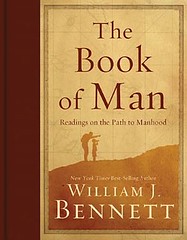
The Book of Man

Another entry from “The Book of Man,” Saint Crispin’s Day Speech, by William Shakespeare.

This poem gives an “interpretation of what manhood looks like in war.” In the midst of battle with France, in the face of daunting odds, English King Henry V gives a rousing speech to his men.

He reminds them that there are things worth fighting for, and that a man’s honor is worth more than any material possession, any wealth, that one may accumulate. He places a greater value on a small group of determined men rather than a large army of half-hearted men. There is pride in seeking honor and a brotherhood forged in combat which cannot be broken. The proof of a true man is he who fights for what is truly important.

Isn’t this still so true? Some of the best, most character-forming, richest experiences I have had have come from a small group of people working against significant challenges for the greater good. I have experienced this in the Navy, and also, on a less grand scale, in the workplace. There is a bond made between people who have fought side-by-side that is not easily forgotten. It could be years before you hear again from these men, these fellow brothers, but there is not a day in which they are not carried within your heart.

It is your brothers, your comrades, who carry you on when you contemplate giving up. You spur each other on to greatness. And when it is all over, win or lose, you know that you are better off for the experience. And ever after, you know that you are not alone in the world. There is a level of loneliness which you cannot sink to, because you brothers exist somewhere in the world. You are connected, united.

There are few better feelings in the world than knowing that an honorable, courageous man has got your back. And there are few things of greater worth than to give your life and your self for the sake of one of your brothers.

The Papal Encyclicals

The Papal Encyclicals

This is another selection from the reference section of the parish library which caught my eye: The Papal Encyclicals.

It’s probably another way-too-ambitious undertaking, but I would *like* to read through them all. 🙂 Vol.1 covers years from 1740 to 1878.

I’m hoping, like “The Book of Man,” that I will be able to make this a regular blog posting event. I’m liking the idea of posting more frequently and having certain topics that I can follow through on long-term.

Let me know what you think and also if you have any suggestions for future discussion! 🙂

Donovan Campbell

The Book of Man

I came into the parish library today after work and found a book stuck in the Reference section that didn’t quite look like it belonged there. It was called, “The Book of Man: Readings on the Path to Manhood,” by William J. Bennett. It’s a collection of writings meant to instruct today’s man in what it means to be a man, as well as providing some examples – mainly positive ones – to inspire our men and show them how to live out an authentic masculinity.

I think I’ve fallen in love with the concept of the book already. There’s not much that I love and crave more than a man living as a man ought. Males and females are radically different, yet complementary, so the feminine part of me craves true masculinity.

I’m not sure if I will buy this book (probably eventually), but I’m thinking that it might be more enjoyable to savor it. To read one section in it every time I come to church and write about what I learned from it, about what attracted me as a woman, and my hopes and dreams based on it for the men in my life.

Profile: Donovan Campbell

While leading Marines during Operation Iraqi Freedom, he learned that he didn’t gain the respect of his men from great feats or amazing acts of heroism, but consistency in his actions – an internal integrity which spanned from the largest decisions to the routine actions of everyday life. He also showed how both he and his men often had to show restraint, even when that choice could result in their own death. They would make decisions that put them in greater harm, so as not to harm civilians; and they would rush to the aid of others, even if that meant making themselves a target. He also shows how men, especially when fighting together, form bonds and back each other up. Real men are supportive and reliable – you can count on them to be there and to do what is right. The end of the passage is summed up with the Marine Corps motto: Semper Fi. Always faithful. Which is an excellent quality in a man.

Pressing On

Since today was payday, and since I had to stop by Domino’s Farms to get some money from the bank for our workday field trip to Blimpy Burger, I got the urge to stop by the Our Lady of Grace bookstore. I didn’t want to keep my siblings waiting, so I made a second trip after work, so that I could browse the store.

The store is like a crackhouse for me; meaning that every time I stop in, I am compelled to buy something. 🙂 Today, after careful inspection of wares, I picked up a book called “Between Sundays,” by Shawn Craig. The premise of the book is in the question: How do you maintain your faith Monday through Saturday? It is organized by week of the year (Week 1, etc.) and has entries for each day of the week. Each day has a particular theme, Scripture verse, reflection on the subject and ends with a prayer. On Saturdays, there are Weekend Reflections to read and then a set of questions to reflect upon (and they give you space in the book to write out your answers to the questions). There are no entries for Sundays. (Presumably, you wouldn’t have a problem with knowing how to express your faith on a Sunday. 🙂 Plus, the title of the book is *Between* Sundays….)

No time like the present to start the book, right? 🙂 I had to Google what week of the year we are in (since this is not information that typically concerns me). In case you were curious, we are in week 22.

Today’s theme is: Press On. As I read the reflection, I found that there was more than one way to look at the theme (although, I am not sure that the author intended there to be multiple).

The first image was that of a runner in a race, only having his eyes on the finish line and looking back on their competitors. What struck me most about this image wasn’t the keeping-your-eye-on-the-prize aspect, but more the concern with one’s competitors. Why *do* we get so concerned with how well (or how poorly) others are doing relative to our own performance? I get it about healthy competition and motivation and such, but I think there is a lot of danger when we are constantly concerned with the competition.

Danger #1: We tend to wish for the ill of the other person. To our concupiscent hearts, it is not enough to want to win, we want the other guy to lose.

Danger #2: We can get depressed or despair of our own worth. By constantly looking at the field, we are inclined to underestimate our potential. We can psyche ourselves out, in a way, even to the point of *actually* performing worse.

Danger #3: We can become envious of the gifts that God has given other people and not be as appreciative (or aware) of the gifts that He has given to *us*.

Danger #4: If we aren’t looking where we are going, we can easily stray off course. We cannot judge what is the right path for us by looking at where the competition is going. This goes for our journey in faith as well. Just because your friend does X, Y and Z, doesn’t mean that you need to do the exact same thing in order to be a holy disciple. One person may have a deep devotion to the Rosary and may pray it faithfully every day. You may struggle to say even a decade once a month, if you remember. This is okay. Don’t stress about it. Your path is different than their path. Just listen to the Holy Spirit. I’m sure He will let you know if you should be doing something – and then give you the grace to be able to do just that.

The next image presented was that of Lot’s wife. Especially when we are talking about spiritual conversion, this can always be a temptation: to look back wistfully at the way we used to be. I know for me this is a particular weakness. I grew up as secular as you can get. I was so immersed in secular culture, I even got a degree in it! (No kidding, I have a Bachelor’s in American Culture!) In general, I accepted everything that the world taught without really examining their claims, especially on topics such as relationships, sexuality and morality.

Once I entered the Church, I learned that the way the world views these issues isn’t really healthy for us. (And that’s why God and the Church have rather conflicting views of these things – God wants, above all, for what is truly good for us. If it’s not healthy, then we shouldn’t be involved in it; God doesn’t want us to get hurt.)

But.

Even though I *know* that these things are wrong or unhealthy, sometimes they are still attractive.

Especially flirting. I love flirting. And I used to be good at it. 🙂 But is it really harmless and cute? Or is it sometimes treating the other person as an object for my amusement? Can it be abusing our sexuality? Manipulation? If I flirt, am I really concerned with the other person’s emotions, or am I just trying to elicit the proper response from them so that *I* feel better? Where and how do we draw the line?

Once we grow in holiness, we cannot look longingly back on our sinful lives that we have left behind. There is nothing left for us there. We must, as the theme goes, press on towards God and a new life of grace.

Another image was of the Holy Spirit leading us onward. They emphasized complete trust in Him to be able to guide our lives. Yet another stumbling block we have all too often: inordinate self-reliance. We try so hard to convince ourselves that we don’t need God. That we can handle things on our own. Too frequently, we only turn to Him when we have made a complete mess of things. The challenge is to rely on Him for all things – not so that we don’t have to take responsibility for things in our life – but so that there is no part of our lives into which He is not welcome.

The last image for me was that of being on the path, looking expectantly and joyfully toward our goal. What is the purpose of all this self-mastery and obedience? To be with God forever, sharing in His Divine Life! What could be better than that?

A Reflection on a Reflection

Zenit posted this reflection by Pope Benedict, and it really spoke to me. So, I’m putting it out there, along with my own commentary, 🙂 so that our shepherd can feed you spiritually, as well. 🙂

Pope Leads Roman Priests in Scripture Reflection

 Considers Vocation, Lack of Catechesis, Truth and Charity

 VATICAN CITY, FEB. 24, 2012 (Zenit.org).- Benedict XVI on Thursday met with priests of his diocese and led them in “lectio divina,” offering a spontaneous Scripture reflection.  Following a reading from the Letter of St. Paul to the Ephesians, the Pope gave an extensive off-the-cuff commentary on the passage.

The Apostle says: “I … beg you to lead a life worthy of the calling to which you have been called, with all humility and gentleness, bearing with one another in love, making every effort to maintain the unity of the Spirit in the bond of peace.”

The Holy Father reflected on the vocation to the priesthood.  [I think it is quite interesting that the Holy Father picked this passage.  See, for me, this passage has always spoken to me of my vocation, to be an intercessor, and in a particular way, to be an intercessor for priests.]

The first call we receive is that of baptism, the Pope explained, the second is the vocation to be pastors at the service of Christ. “The great ill of the Church in Europe and the West today is the lack of priestly vocations. Yet, the Lord calls always, what is lacking are ears to listen. We listened to the Lord’s voice and must remain attentive when that voice is addressed to others. We must help to ensure the voice is heard so that the call will be accepted.”  [I think this lack of hearing is not reserved to men discerning a vocation to the priesthood, but everyone, especially in this age where we barely take the time to reflect on the sound bites which are sent our way – much less a message which actually requires pondering.  How can we possibly hear God if we are surrounding ourselves with a cacophony of meaningless noise?  I think as a coping mechanism, we have created what I call the “Junk Filter.”  My junk filter is usually running on High; meaning that very little gets through, and most of what does gets immediately trashed and forgotten as “irrelevant data.”  This extends not only to that which I hear, but also to that which I read – to the extent that often I find myself not “reading” at all, but scanning through text to see if anything might jump out that might have significance for me.  The problem with all of this is that there is much of value which I am missing.  And, worst of all, the voice of God could get caught in my junk filter without my being aware of it.]

According to St. Paul, the primary virtue that must accompany vocation is humility. This is the virtue of the followers of Christ Who, “being equal to God, humbled Himself, accepting the status of servant, and obeying even unto the cross. This was the Son’s journey of humility, which we must imitate. … The opposite of humility is pride, the root of all sin. Pride means arrogance, which above all seeks power and appearance. … It has no intention of pleasing God; rather of pleasing itself, of being accepted, even venerated, by others. The ‘self’ becomes the centre of the world; the prideful self which knows everything. Being Christian means overcoming this original temptation, which is also the nucleus of original sin: being like God, but without God.”

By contrast “humility is, above all, truth, … recognition that I am a thought of God in the construction of His world, that I am irreplaceable as I am, in my smallness, and that only in this way am I great. … Let us learn this realism; not seeking appearance, but seeking to please God and to accomplish what He has thought out for us, and thus also accepting others. … Acceptance of self and acceptance of others go together. Only by accepting myself as part of the great divine tapestry can I also accept others, who with me form part of the great symphony of the Church and Creation.” In this way, likewise, we learn to accept our position within the Church, knowing that “my small service is great in the eyes of God.”  [This is a hard lesson to learn even within my own vocation.  See, just because God has made an individual extremely important in my life (so that I – in my self-absorption – might occasionally remember to do that to which I have been called), this does not mean that I am equally important in that other’s life.  And the truth is:  I shouldn’t expect this.  God gave me this person so that I might support him in prayer, because he needs this.  I am to be a spiritual warrior, in a sense, so that he can do what it is that God is calling him to do.  And so, while I am struggling myself with trying to create some distance from the secular cacophony so that I might better hear God, I need to remember that he, and others, also need that same distance.  However hard it might be when normal channels of communication are severed between friends for the sake creating this opportunity for inner solitude.  It is precisely in this dynamic that I can learn more fully what it means to love, which I think is why God gave me this vocation in the first place.  Because this other person is such a central part of my day and my prayers, I assume for myself a similar status.  Aren’t I important, too?  Of course I am!  But wait, isn’t that a distinct lack of humility?  Why, yes, it is.  And further, it’s an insufficient expression of love.  For what is love but giving your life in some way for another person?  I should only be seeking to give and not to receive.  I am only being asked to give of my time and my prayers.  Any friendship which we might have is a gratuitous gift from God.  True love in Christ is to always want what is best for the other.  Obviously, the opportunity to grow closer to Christ is what is best for the other.  And so I must not mourn the seeming separation that the fasting from technological communication causes, but rejoice in the fact that a deeper bond is being made with our Lord.  The reality is that as each of us individually becomes more closely united with our Lord, we are more closely united to each other – because we are part of the same body which is Him.  Sometimes, I just need to hash this all out on paper (or cyberpaper, as the case may be), in order to see what it is which God wishes me to see.  And I think that in the end, He’s trying to tell me that humility and obedience to His will ultimately leads to an increase in love.  Following my inclinations will only frustrate that after which I am seeking.]

Immature faith

Lack of humility destroys the unity of Christ’s Body. Yet at the same time, unity cannot develop without knowledge. “One great problem facing the Church today is the lack of knowledge of the faith, ‘religious illiteracy,'” the Pope said. “With such illiteracy we cannot grow. … Therefore we must reappropriate the contents of the faith, not as a packet of dogmas and commandments, but as a unique reality revealed in its all its profoundness and beauty. We must do everything possible for catechetical renewal in order for the faith to be known, God to be known, Christ to be known, the truth to be known, and for unity in the truth to grow.”

We cannot, Benedict XVI warned, live in “a childhood of faith.” Many adults have never gone beyond the first catechesis, meaning that “they cannot – as adults, with competence and conviction – explain and elucidate the philosophy of the faith, its great wisdom and rationality” in order to illuminate the minds of others. To do this they need an “adult faith.” This does not mean, as has been understood in recent decades, a faith detached from the Magisterium of the Church. When we abandon the Magisterium, the result is dependency “on the opinions of the world, on the dictatorship of the communications media.” By contrast, true emancipation consists in freeing ourselves of these opinions, the freedom of the children of God. “We must pray to the Lord intensely, that He may help us emancipate ourselves in this sense, to be free in this sense, with a truly adult faith, … capable of helping others achieve true perfection … in communion with Christ.”

Truth

The Pope went on: “Today the concept of truth is viewed with suspicion, because truth is identified with violence. Over history there have, unfortunately, been episodes when people sought to defend the truth with violence. But they are two contrasting realities. Truth cannot be imposed with means other than itself! Truth can only come with its own light. Yet, we need truth. … Without truth we are blind in the world, we have no path to follow. The great gift of Christ was that He enabled us to see the face of God.”

“Where there is truth, there is charity,” the Pope concluded. “This, thanks be to God, can be seen in all centuries, despite many sad events. The fruits of charity have always been present in Christianity, just as they are today. We see it in the martyrs, we see it in so many nuns, monks, and priests who humbly serve the poor and the sick. They are the presence of Christ’s charity and a great sign that the truth is here.”  [Perhaps what is needed is to view it not so much as being a spiritual warrior, but as being a spiritual servant.  For it certainly isn’t through any action of mine that my prayers have efficacy, but through the fact that God allows me to participate in this way so as to be a conduit for His grace.  It is His mercy which allows for my participation, not for the good of the person or people for whom I pray, but for the conversion of my own heart to be conformed to His.]

Falling in Love

The Pope’s message presented the vocation as a response to divine love.

“We are loved by God even ‘before’ we come into existence,” the Holy Father stated. “Moved solely by his unconditional love, he created us ‘not … out of existing things,’ to bring us into full communion with Him. […]

“The profound truth of our existence is thus contained in this surprising mystery: every creature, and in particular every human person, is the fruit of God’s thought and an act of his love, a love that is boundless, faithful and everlasting. The discovery of this reality is what truly and profoundly changes our lives.”

The Bishop of Rome quoted at length St. Augustine’s expression of his discovery of God, “supreme beauty and supreme love.”

“[…] You called, you shouted, and you broke through my deafness. You flashed, you shone, and you dispelled my blindness. You breathed your fragrance on me; I drew in breath and now I pant for you. I have tasted you, now I hunger and thirst for more. You touched me, and I burned for your peace,” the Holy Father quoted.

“With these images,” he reflected, “the Saint of Hippo seeks to describe the ineffable mystery of his encounter with God, with God’s love that transforms all of life. It is a love that is limitless and that precedes us, sustains us and calls us along the path of life, a love rooted in an absolutely free gift of God.”

“Every specific vocation is in fact born of the initiative of God,” Benedict continued. “It is a gift of the Love of God! He is the One who takes the ‘first step,’ and not because he has found something good in us, but because of the presence of his own love ‘poured out into our hearts through the Holy Spirit.'”

Yet, the Holy Father said, “the appealing beauty of this divine love, which precedes and accompanies us, needs to be proclaimed ever anew, especially to younger generations.”

“This divine love,” he said, “is the hidden impulse, the motivation which never fails, even in the most difficult circumstances.”

If you get a chance today read Psalms 139.
God bless!

H/T to Steve

Retreat Journal

Day One:  Friday, December 09, 2011

I come into this retreat experience remembering the disappointment that was last year’s retreat.  My expectations were completely different than what actually took place and caused no small amount of frustration.  This year, I know basically what to expect, and I know that I can to an extent determine the course of my own retreat experience.  Last year, I thought that we were confined to the schedule of the retreat center and was rather annoyed to find out that instead of a restful, quiet, prayerful time, my day was filled from dawn to starlight with conferences.  Now, I know that I can skip those and that’s totally okay.  Not that the talks might not be valuable in themselves.  But for me, I need some time set aside for personal reflection and prayer.  I have tons of distractions at home and find it difficult to get anything done there.  Here, at least, I have fewer distractions.  I hope.  🙂  I know that I have my laptop and my cell phone, but I intend to use my computer for only offline work, and my cell for the Liturgy of the Hours.

What are my goals for this retreat?  I suppose first off, I want to get some studying in for my Nature & Mission of the Church final that I have on Tuesday.  I know, that doesn’t sound very retreatesque, but I really should study, and it’s about His Church, so it will help me to get closer to God while I read the material, right?  I think that’s a valid use of my retreat time.  Perhaps I’ll work on that second paper for the class while I am here as well, for much the same reasons.  On a personal note, I hope to spend some real time in quiet prayer and reading of the Scriptures.  I pulled several books off the shelf from their library and hope to dive into those a bit, too.

What’s happened so far?  Well, Mila and I arrived a little before 6 pm and got our room assignments. I spend a few minutes, not really unpacking, but rather putting things in the general area of where I would like them to be and just taking a moment in my room to be alone.  I know, not my usual modus operandi, but a good thing, I think.  At 6:30 pm, we went in to dinner, and I ended up sitting next to a girl who lives in Rochester Hills and grew up at St. Anastasia (although she doesn’t go there now).  We had a good conversation, which ran until the time for our opening conference at 7:30 pm.  I have to say, that was *long*.  Perhaps not temporally long, but it was tough to sit through all of that.  Plus, the little movie (or, well, longish movie) that they had us watch was set to this really sugary, calming music.   Probably not the best move to show people after a long day at work at the end of a long work week and right after eating.  🙂  But, I managed to stay awake, although I was tempted to leave and return to my room for a little while.

The message of our time here at the retreat center is “Are We There Yet?” and is attempting to focus us on our lives and the goal of attaining Heaven and how to get there.  Okay, decently interesting.  I suppose I can reflect on this.  🙂  The only problem came when they started talking about the schedule for the next couple days.  See, most of it was fine, until they started explaining about Reconciliation.  There are going to be two time periods tomorrow where we can go to the chapel and the priests will be available for individual reconciliation.  However, they are also going to have a communal reconciliation on Saturday night, and the priest said explicitly that, “Just come up to me or Fr. P.  You don’t have to tell us any sins or say any act of contrition, because we will assume that you have already done this on the way up.  Just let us know that you want the sacrament and we will give you sacramental absolution.”  Is this even legit?  I thought that communal reconciliation was just for cases of emergencies, like war or something.  I don’t see how this could be justified when we have recourse to Reconciliation two other times on the same day!

Alright, I’m not going to gain any headway on that matter and now probably isn’t the best time to try and argue about that.  Plus, maybe I’m wrong.  I really don’t know what the rules are for religious order priests.  Perhaps it just rubs me the wrong way and that’s just my issue.  No matter.  I can just go to Reconciliation the normal way and not worry about the rest.  And, hey!  I can spend that time that they are going to be using for the communal reconciliation to pray on my own!  Win-win!  🙂

Next item that made me want to say Hmmm…  The anointing.  At the end of the opening conference, they had us all come up to either Fr. P or the female retreat director (or assistant, I’m not sure what her official title is) to get an anointing, which I took to be a kind of blessing for our retreat.  And what she said was pretty much that, a blessing.  It was good.  And it smelled good too!  Wait.  Too good.  Is that…?  No…  Could it be…?  Did they just anoint us all with Holy Chrism?!?  Can they do that??

At any rate, I now smell great.  We all spent some time in front of the “exposed” Eucharist (the ciborium was out of the tabernacle, yet remained covered).  Not sure if that’s different that if He were in the tabernacle or not, but it’s Jesus and the point is that I got to spend some time with Him.  I think, too, that my wish that he were out a little more is okay by Him; after all, I just want more of Him…  How could He say “No” to that?  😉

And now to start reading the first of my retreat books:  “The Little Prince” by Antoine de Saint Exupery.  I remember reading this is French class; however, any Christian references were completely lost on my atheist self, so I was quite surprised to see it on the shelf here under Spirituality.  I suppose I am about to find out…  Wish me luck and that the Holy Spirit may see fit to give me some insight.  🙂  See you on the flip side!

Day Two:  Saturday, December 10, 2011

Good Morning!  This morning’s schedule looks pretty full already!  🙂  20 minutes until Morning Prayer, breakfast, a conference, a meeting with a spiritual director, reconciliation, Mass, then lunch!  🙂  That’s a lot of eating in just a few hours!  🙂  I’m going to go get clean and put my thoughts in order!

I have to say, I love being in places like this.  I love the simplicity of it all.  It reminds me of being in the military and staying in hotel rooms.  Oddly enough, these are things which I greatly enjoy.  And they had my favorite Kashi cereal for breakfast!  Yum!

I feel a little guilty by missing their conference.  However, in their road trip analogy, some of the talks which they outlined yesterday, I feel that I am comfortable with in my own journey.  As I sit here in my room, looking over my book of prayer intentions, I see a line which I had written in the opening page, regarding intercessory prayer, “It is casting our weakness before God’s strength and having a bit of God’s passion burn in us.”  This simple sentence speaks to me in so many ways.  My priest offers to us to think of the offering of the gifts during Mass to be an opportunity for us to put any of our needs or struggles before the Lord, so then as we pray that the Holy Spirit transform the bread and wine into the body, blood, soul and divinity of Christ, so too will something miraculous happen to those particular items which we will to also be upon that paten.  I feel that I am constantly putting things on my paten and offering them to God.  “Please, these are the things that I care about.  I know you can fix them.  Please help!”  Mostly they are people.  I love people.  I love to make people happy.  I love to help people.  I love to be around people.  And I love to pray for people.  I suppose this is a good thing, since I am an intercessor, right?  The part which talks of a bit of God’s passion burning within me, I feel is that deep care, concern and love that I have for the people for whom I intercede.  They may not be people, necessarily, whom I know personally.  Or they may be people with whom I have difficulty.  But nonetheless, I have love for them in my heart, and concern for their well-being, which I believe is God’s love and passion for His people, which He allows to flow through me for their benefit.  The connection between all of us people is as amazing as it is mysterious and I am so grateful for the opportunity to be a part of this.  I wouldn’t miss out on it for anything!

I now have about 7 minutes before my meeting with one of the retreat spiritual directors here.  I’m not exactly sure what I will say, or what advice to ask for.

Oh wow.  I don’t even know what to say about that.  I have to talk to my spiritual director after that meeting.  Much to pray about.

Thank you, Lord, for a beautiful Mass.  I am so happy to be allowed to participate in giving Your Precious Blood to others.  I pray that they will be open to the graces which You wish to bestow upon them, and that I may also be open to Your grace.  Amen.

I love going to Reconciliation.  I am always glad to tell the Lord through the priest that I am sorry for offending Him and that I wish for His grace so that I may live a holy life deserving of the gifts which He gives me.  This one started off a little humorous:

I was probably the 6th or 7th penitent.  I entered the confessional and began:

“In the name of the Father, and of the Son and of the Holy Spirit, Amen.  Bless me, Father, for I have sinned.  It has been – ”

“Are you here for Confession?”

“Um, yes?”

“Oh, okay.  Go ahead.”

Cover of "The Little Prince (Turtleback S...

I finished reading “The Little Prince.”  It is a cute story.  There is much in there that I could relate to Biblical truths, but for now, I think I will simply reflect upon it in my heart for a bit.  There is one part that I’d like to share.  The little prince relates the story of the fox which he tamed.  It is this taming, this relationship, which makes the fox special to the prince and makes the prince special to the fox.  He also relates this taming to the relationship that he has with his rose on his small planet.  Of this the fox says, “It is the time you have wasted for your rose that makes your rose so important.”  This makes me think of two things:  first, about how praying for someone, if you do it sincerely, creates a visceral connection between you and that other; and second, about how Father says that “wasting time” with the Lord is the best way to spend your time.  I think because it fosters that relationship.  Particularly in front of the Blessed Sacrament, are we tamed by Him.

Next, I started working on my paper a bit.  Peeked through some notes.  Dropped in and stood outside the door to one of the conferences to see what it was that I was missing.  Came back, and worked some more on my paper.  Spend a bit of time not doing anything in particular, but just sitting back and enjoying the quiet.

I suppose that I’m not too good at being quiet for a long period of time, because at 5 pm, I decided to check out the other conference, although not quite in the way that one might expect.  I had discovered on my previous scouting mission that there is a speaker that feeds into the living room area right outside the conference room.  So, I could sit out there in a nice, big comfy chair and listen to the talk.  Even better, I brought with me Henri Nouwen’s, “Can You Drink the Cup?”  So I got to read and listen at the same time.  Multitasking at retreat!  Score!  🙂  15 minutes until dinner, and it’s supposed to be Annie’s famous pot roast.

Words worth reflecting on from Fr. Nouwen, “Lifting our cup means sharing our life so we can celebrate it.  When we truly believe we are called to lay down our lives for our friends, we must dare to take the risk to let others know what we are living,” (59).

Next book read, “The Seven Deadly Sins and Why We Love Them,” by John Steinbacher.  The part I like best about this book is that it spoke of the power of prayer, and how patients can be healed or recover faster when their priest is praying for them.  I’m sure this is why I have been out of the ER for as long as I have.  Thank you!  🙂

After that, “Lessons from the School of Suffering,” by Fr. Jim Willig:

One day, when I thought I was alone, I prayed in church.  While making this offering before the cross, a parishioner came up to me, put her arm around my shoulder and prayed, ‘Dear God, please heal Father Jim.  And give me his cancer.’  I was incredulous.  I looked at her, and then back to the Lord and quietly prayed, ‘If she insists, Lord, hear our prayer!’  Later I was able to pray, ‘Lord, rather than give my cancer to her, give her heart of love to me – the love that prompted her to deny her very self and pray in such a loving way,’ (21).

I pray like this sometimes.  If I see someone I care greatly for suffering or sick or in pain, I will often ask that the Lord give that to me instead of to him, if that be His will.  Another great quote from Fr. Jim is, “I do not know what my future holds, but I know who holds my future,” (23).

Day Three:  Sunday, December 11, 2011

I went to bed about midnight, knowing that I was going to have to get up early in the morning and leave the retreat center prematurely so that I could attend the baptism of my cousin’s daughter, which was scheduled for 8 am.

This morning, I’m feeling very sick.  I really just want to curl up in my own bed and just sleep the day away, but I have a lot of things to do.  After the baptism, I have to go to the 10:15 am Mass at St. A’s because they are going to read my Mass intention for Fr. Anonymous and I really want to be there for that!  🙂  After Mass is RCIA.  Hopefully, I will be able to get back home about 1:30 pm.  However, I will still have to study and write my papers, so I won’t be able to crawl into bed just yet.

Lord, please, give me strength!

Why the Wedding Ring is Worn on the Fourth Finger

Why Wedding Ring on Fourth Finger?

The thumb represents your parents.
The index finger represents your siblings.
The middle finger represents yourself.
The ring finger represents your spouse.
The little finger/pinky represents your children.

Hold your hands together like the picture. Join your middle fingers back-to-back, and the remaining fingers tip-to-tip. Now, try to separate your thumbs. They will separate because your parents are not destined to live with you forever. Rejoin your thumbs and separate your index fingers. They will separate because your siblings will have their own families and lead their own lives. Rejoin your index fingers and separate your little fingers/pinkies. They will separate because your children will grow up, get married, and settle down. Rejoin your little fingers/pinkies and try to separate your ring finger. They will not be able to separate because your spouse is meant to be with you throughout your entire life, through thick and thin.

(Re-posted from a friend’s Facebook page).

A Prayer for Purity

Our Lady of Good Counsel
Image via Wikipedia

O Most loving Father, we need You to attain purity and the joy it brings, for without You we can do nothing. Teach us Your children to reverence our bodies and the bodies of our sisters and brothers in Christ. Help us to recognize in each human person an incarnate spirit, an image of God, a sacred temple of the Holy Spirit, a person worth all the blood of Christ, a child of God to be loved with Your benevolent love. Teach us to reverence the sacredness of human sexuality, an icon of Your divine self-giving and divine creative power. Deliver us, Father, from the evil of seeing the bodies of Your daughters and sons as mere things and objects, and the evil of using them for our own selfish ends. Forgive us our sins which destroy our friendship with You, the source of all our happiness. O Most beloved Mother, through your all-powerful prayer, help us to live with the dignity of a child of God. May our reason and free will be the masters of our feelings and desires. And may Jesus be our one Master and Lord.

Amen!

(Composed by Dr. Raul Nidoy, taken from today’s bulletin, Our Lady of Good Counsel Parish, Plymouth, MI)