Category Archives: Neat Things I Didn’t Author

Be a Sheep

Pretty Sheep - Day 41/365

If we are sheep, we overcome;
if wolves, we are overcome

As long as we are sheep, we overcome and, though surrounded by countless wolves, we emerge victorious; but if we turn into wolves, we are overcome, for we lose the shepherd’s help. He, after all, feeds the sheep not wolves, and will abandon you if you do not let him show his power in you.

What he says is this: “Do not be upset that, as I send you out among the wolves, I bid you be as sheep and doves. I could have managed things quite differently and sent you, not to suffer evil nor to yield like sheep to the wolves, but to be fiercer than lions. But the way I have chosen is right. It will bring you greater praise and at the same time manifest my power.” That is what he told Paul: My grace is enough for you, for in weakness my power is made perfect. “I intend,” he says, “to deal in the same way with you.” For, when he says, I am sending you out like sheep, he implies: “But do not therefore lose heart, for I know and am certain that no one will be able to overcome you.”

The Lord, however, does want them to contribute something, lest everything seem to be the work of grace, and they seem to win their reward without deserving it. Therefore he adds: You must be clever as snakes and innocent as doves. But, they may object, what good is our cleverness amid so many dangers? How can we be clever when tossed about by so many waves? However great the cleverness of the sheep as he stands among the wolves – so many wolves! – what can it accomplish? However great the innocence of the dove, what good does it do him, with so many hawks swooping upon him? To all this I say: Cleverness and innocence admittedly do these irrational creatures no good, but they can help you greatly.

What cleverness is the Lord requiring here? The cleverness of a snake. A snake will surrender everything and will put up no great resistance even if its body is being cut in pieces, provided it can save its head. So you, the Lord is saying, must surrender everything but your faith: money, body, even life itself. For faith is the head and the root; keep that, and though you lose all else, you will get it back in abundance. The Lord therefore counselled the disciples to be not simply clever or innocent; rather he joined the two qualities so that they become a genuine virtue. He insisted on the cleverness of the snake so that deadly wounds might be avoided, and he insisted on the innocence of the dove so that revenge might not be taken on those who injure or lay traps for you. Cleverness is useless without innocence.

Do not believe that this precept is beyond your power. More than anyone else, the Lord knows the true natures of created things; he knows that moderation, not a fierce defence, beats back a fierce attack.

— A homily by St. John Chrysostom
H/T to Steve for sending it to me.
Photo credit to Olivia Bell Photography
Blessed are the Bored in Spirit

I found this hanging out in my Bible in the book of Ezekiel.

Thou shalt:

  • Be single-hearted toward Me
  • Be reverent in speech and conduct
  • Keep priorities
  • Be respectful and obedient
  • Defend life, womb to tomb
  • Be faithful to vocation, future spouse
  • Be trustworthy
  • Be honest in word and deed
  • Have only pure admiration
  • Be grateful for what you possess
  • This Was Their Finest Hour

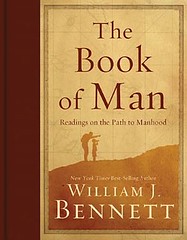
    The Book of Man

    “This Was Their Finest Hour,” by Winston Churchill.

    After witnessing the fall of other European countries to the forces of Hitler and Mussolini, Britain feels the threat advancing toward them.

    He reminds us that we cannot undo the past. In a moment of crisis, we cannot waste time reflecting and bewailing past mistakes and actions, but must assess our current situation, take stock of the things in our capacity to do, and then do them. It is not a time to break down and cry, but to show what you are made of – to rise to the occasion.

    He tells the people that even against the odds, there is no reason for despair or panic; and reminds them of the last war, where for the first four years they were subject to defeat, yet managed to emerge from this with hope.

    He shows the battle for Britain as the turning point for the fate of the world. If Britain is victorious, the whole world is victorious. Yet, if Britain is defeated, the whole world will follow her fate. Britain, then, not only has a duty to herself, but to the whole world.

    This speaks an awful lot about the role and importance of community, doesn’t it? Especially of global community. And how we are our brother’s keeper. We stand as one, or we fall as one. Our actions do affect those around us. There is such a thing as a higher purpose, a moral imperative, an objective truth. If we persevere in our struggles, if we fight the good fight, if we live with integrity and honor, then regardless the outcome, it will be our finest hour as well.

    Do we live this way?

    Concord Hymn

    The Book of Man

    “Concord Hymn” by Ralph Waldo Emerson was written as a tribute to the soldiers of the Revolutionary War.

    Not only does it evoke poignant images of the soldiers, but it brings to mind the import of what these men – these common men – did. Perhaps most importantly, they took action. They saw an injustice and they fought to right it. They gave their lives so that their children and their children’s children could know freedom. In the midst of a slumbering world, blind to injustice and tyranny, these men woke us all up and taught us that complacency has no place in the life of men. And that we the beneficiaries of their struggles, have an enduring obligation to honor their memory and keep up the fight in whatever new form it may take in our lives today.

    What are those things today against which we must stand? Where is the tyranny and injustice in the world today? In what ways are we ignorant and complacent to wrongdoing and evil, when we should be fighting? When *we* should be fighting — every common man and woman and not some vague and nebulous “they”? What was this country founded upon? Life, liberty and the pursuit of happiness? How can we then take a blind eye when life is being redefined such that the right to life becomes a subjective; where one person can arbitrarily declare that another doesn’t have such a right? Is this not an innate right endowed by our Creator? No? Then what country is this? And are we willing to fight to get that country back? What about liberty? Specifically religious liberty? I believe we are all slumbering. Society in general and our governing officials — be it our executive, legislative or judicial branches — are herding us to a forced, homogenized relativism as regards our religious views. Laws are being enacted which curtail our right to religious liberty, yet no one is paying attention.

    Who is going to stand up and fire that shot which will again be heard around the world? Who is going to again remind everyone that there are objective truths, and that those truths are worth losing your life over?

    Joshua Marcellino

    The Book of Man

    The next entry is a profile on Joshua Marcellino, and is here to show us that war, no matter how necessary, is still a horrible event which can have a profound effect on the people experiencing it.

    Joshua saw action in Iraq. He tells us of the boredom that accompanies the near-constant threat. You never know who or where or when the enemy will strike. This part of the stress of war is usually understood by outsiders, but the stress of boredom and constant vigilance is rarely understood. Particularly as it affects Marines, who are trained to be do-ers – sitting by idly is not something they do well.

    He speaks of lost innocence, and of having to fight against the innate compulsion to protect the innocent. Those on the other side of the battle lines didn’t have the same respect for human life and would use even children as means to deliver bombs. If you tried to save one of these little ones, it could well cost you your life.

    He notes that even though the situation is awful, it can still be a place which nurtures faith, as “each day you realized God is in control of every second,” and “when you’re in combat, you see prayer answered.” It’s comforting to know that God has a plan, despite and through the horrors. Without faith, it is easy to despair.

    Re-acclimation to civilian life is difficult as people try to understand what you went through. Sometimes, there are just no words to describe it and frustration sets in. How do you explain something which you don’t fully understand yourself? How do you cope with helplessness, when all you’ve ever strived to be in your life has been the opposite of helpless? He describes how previous wars have fostered a sense of brotherhood amongst the soldiers, whereas this war, to an extent, encourages detachment and isolation. You almost have to harden your heart to caring too much, for you never know if tomorrow your coworker, your friend, might die – and you’ll still have to continue the fight without any time to grieve.

    Nimiam Licentiam: To Bishops of Poland: On Validity of Marriages

    The Papal Encyclicals

    The third encyclical, Nimiam Licentiam: To bishops of Poland: On validity of marriages, was written on 18 May 1743.

    In this encyclical, the problem is that too many marriages are being dissolved in Poland. The pope lays out some of the reasons why this is happening and gives guidelines so that the sanctity of marriage can be better understood.

    He notes that there have been a lot of “hidden” marriages occurring, which are not celebrated publicly.

    When judging marriages for validity or nullity, the judges have been inexperienced, ignorant, unqualified, or dishonest. If a person appealed, the second judge would charge an additional fee and overturn the ruling of the previous judge.

    Marriages were conducted by any random priest and not the pastor who knew the couple.

    Marriages were entered into by force or through fear.

    Banns were not posted for three feast days prior to the wedding ceremony, to ensure that there were not any impediments to marriage.

    Priests did not sufficiently inquire to determine if either party had any impediments to marriage.

    Spouses entered pre-nuptial agreements. (The pope said that the penalty for this is excommunication.)

    After listing these various practices which undermine the sanctity of marriage, cause scandal and lead to a higher incidence of the dissolution of marriage, the Pope gives some strategies for avoiding these pitfalls and affirming the permanence and validity of marriages.

    First, the couple’s pastor should be the one to witness the union, unless there is grave and just cause why he cannot.

    Nuptial banns must be posted at least three feast days prior. Only the local bishop can lift this requirement to one feast day or none, and only for grave cause.

    Pastors must inquire of the couples to ensure that they are able to enter into a marriage and that there is no impediment.

    There will be two processes for judging the validity/nullity of a marriage; the first by the bishop and the second by the metropolitan. If there’s any question after that, it goes to the Cardinals (a specific office in the Roman curia?).

    Dear Polish People,
    Marriage is serious business. Do not try to find or create loopholes for yourselves.
    Sincerely,
    The Pope

    Amen!

    The Campaigns of Alexander the Great

    The Book of Man

    The Campaigns of Alexander the Great – as told by Arrian, the Roman historian.

    After a difficult battle, Alexander the Great allowed disabled soldiers to go home, while he and the able-bodied soldiers remained to press on. At their grumbling, he gave a speech meant to shame and encourage them.

    He offers them the opportunity to leave, but first they must understand what he has done for them and what they have done for him in return.

    Personal suffering. Have they suffered more than he has? “There is no part of my body but my back which has not a scar….” He led them to victory. He married as they did, so that his descendants and theirs are similar in bloodline. Even though they have been able to profit from their wars, it was he and not the individual soldier who paid the soldier’s debts. He has rewarded those who have served well and has honored those who had fallen in battle, even paying monies due to the soldier to his surviving family members.

    So what is Alexander saying about how men should behave? I think he is saying a couple of things. First, leaders should be willing to do everything they request of their men. There cannot be an air of superiority among the ranks (although there is quite compelling reasons for hierarchy and differences in authority and role). Second, as regards the soldiers, they should not disgrace themselves to complain about their lot, especially as they have been treated far better than what justice would dictate. Alexander went above and beyond for them, so, to an extent, he expects his men to go above and beyond for him is response.

    Character of the Happy Warrior

    The Book of Man

    In this poem by William Wordsworth, he offers an answer to the question:
    What are the characteristics of a warrior?

    Someone who gives generously from his heart
    Someone who faces challenges cheerfully
    Someone who assesses, analyzes, and executes
    Someone who continues to learn
    Someone who has a firm moral compass and lives his integrity
    Someone who turns pain and struggle into advantage and strength
    Someone who doesn’t allow himself to become jaded, but increases in compassion
    Someone who grows in virtue the more he is tested
    Someone who acts according to reason
    Someone who rights wrongs
    Someone who will bear authority honorably, or step aside for someone who can bear it better
    Someone who is trustworthy and faithful
    Someone who is not caught up with material pleasures
    Someone who is noted for being calm when things are not
    Someone who perseveres
    Someone who is dedicated to his cause
    Someone who does not seek fame nor anonymity but accepts his lot
    Someone who draws comfort from the upright life he leads

    Quanta Cura: Forbidding Traffic in Alms

    The Papal Encyclicals

    The second encyclical is Quanta Cura: Forbidding traffic in alms, and was written on 30 June 1741.

    The problem here seems to be this: Fr. X was getting paid to say Mass for someone in parish A, where the standard stipend for this was, say, $20. Fr. X would then say the Mass at parish B, where the stipend was, say $10. So, he would give parish B $10 and pocket the difference. At least, this is kind of what I’m thinking was going on – it wasn’t entirely clear to me. 🙂

    What was wrong was a couple of different things, according to the Pope. First, the Mass being offered was not celebrated in a location necessarily known to the parishioner who commissioned it. Which could not only upset the parishioner, but also money would have been directed away from the parish that the parishioner intended to support by his alms. In addition, people might start to think that the priest was ripping them off, especially if they didn’t ever see him say a Mass when he had already been paid for doing so.

    On top of all of that, was the real spiritual danger inherent in these practices; the priest would be tempted to avarice by behaving in this manner. It would be possible for him to get caught up in making a profit and not be saying Mass for the good of his flock or the Church.

    So, the Pope censured these activities, asking that his fellow bishops post this letter in their diocese and warn people of the following repercussions for doing this. Laity would be immediately excommunicated. Priests would be automatically suspended, and could only be reinstated by the Pontiff himself. How’s that for deterrent?

    Little wonder that today, if you would like to have a Mass said, the price is only $5 or $10, and Father can only receive one stipend a day, regardless of the number of intentions which are offered at the Mass. (At least, that’s my understanding of current practices. But don’t take my word for it…. Confirm with a canon lawyer! )

    Response to the Archbishop of Canterbury

    The Book of Man

    In this passage, Colin Powell, the then Secretary of State for the United States, defends the use of military might as opposed to diplomacy against Saddam Hussein.

    He says that the time for diplomacy and “soft power” comes after the battles are won, when we have the opportunity and responsibility to build the defeated nations back up and to restore peace to areas ravaged by war. He doesn’t say this explicitly, but I get from what he is saying is that the men of the United States do not fight because they are bellicose but rather because there is injustice which needs to be rectified, and as soon as the mission is complete, the need for force is gone and we just seeks to honor our dead for the lives they have given to the cause.

    Sometimes great sacrifices must be made for the greater good. The only questions to ask are whether the cause is just, and if it is worth the incredible cost of even a single human life, much less many.

    As Colin Powell puts it, “But there comes a time when … talking with evil will not work….” And that’s when we need to take action.