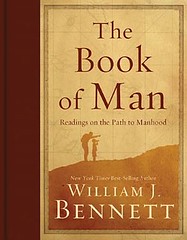
Joshua Marcellino

The Book of Man

The next entry is a profile on Joshua Marcellino, and is here to show us that war, no matter how necessary, is still a horrible event which can have a profound effect on the people experiencing it.

Joshua saw action in Iraq. He tells us of the boredom that accompanies the near-constant threat. You never know who or where or when the enemy will strike. This part of the stress of war is usually understood by outsiders, but the stress of boredom and constant vigilance is rarely understood. Particularly as it affects Marines, who are trained to be do-ers – sitting by idly is not something they do well.

He speaks of lost innocence, and of having to fight against the innate compulsion to protect the innocent. Those on the other side of the battle lines didn’t have the same respect for human life and would use even children as means to deliver bombs. If you tried to save one of these little ones, it could well cost you your life.

He notes that even though the situation is awful, it can still be a place which nurtures faith, as “each day you realized God is in control of every second,” and “when you’re in combat, you see prayer answered.” It’s comforting to know that God has a plan, despite and through the horrors. Without faith, it is easy to despair.

Re-acclimation to civilian life is difficult as people try to understand what you went through. Sometimes, there are just no words to describe it and frustration sets in. How do you explain something which you don’t fully understand yourself? How do you cope with helplessness, when all you’ve ever strived to be in your life has been the opposite of helpless? He describes how previous wars have fostered a sense of brotherhood amongst the soldiers, whereas this war, to an extent, encourages detachment and isolation. You almost have to harden your heart to caring too much, for you never know if tomorrow your coworker, your friend, might die – and you’ll still have to continue the fight without any time to grieve.

Nimiam Licentiam: To Bishops of Poland: On Validity of Marriages

The Papal Encyclicals

The third encyclical, Nimiam Licentiam: To bishops of Poland: On validity of marriages, was written on 18 May 1743.

In this encyclical, the problem is that too many marriages are being dissolved in Poland. The pope lays out some of the reasons why this is happening and gives guidelines so that the sanctity of marriage can be better understood.

He notes that there have been a lot of “hidden” marriages occurring, which are not celebrated publicly.

When judging marriages for validity or nullity, the judges have been inexperienced, ignorant, unqualified, or dishonest. If a person appealed, the second judge would charge an additional fee and overturn the ruling of the previous judge.

Marriages were conducted by any random priest and not the pastor who knew the couple.

Marriages were entered into by force or through fear.

Banns were not posted for three feast days prior to the wedding ceremony, to ensure that there were not any impediments to marriage.

Priests did not sufficiently inquire to determine if either party had any impediments to marriage.

Spouses entered pre-nuptial agreements. (The pope said that the penalty for this is excommunication.)

After listing these various practices which undermine the sanctity of marriage, cause scandal and lead to a higher incidence of the dissolution of marriage, the Pope gives some strategies for avoiding these pitfalls and affirming the permanence and validity of marriages.

First, the couple’s pastor should be the one to witness the union, unless there is grave and just cause why he cannot.

Nuptial banns must be posted at least three feast days prior. Only the local bishop can lift this requirement to one feast day or none, and only for grave cause.

Pastors must inquire of the couples to ensure that they are able to enter into a marriage and that there is no impediment.

There will be two processes for judging the validity/nullity of a marriage; the first by the bishop and the second by the metropolitan. If there’s any question after that, it goes to the Cardinals (a specific office in the Roman curia?).

Dear Polish People,
Marriage is serious business. Do not try to find or create loopholes for yourselves.
Sincerely,
The Pope

Amen!

The Campaigns of Alexander the Great

The Book of Man

The Campaigns of Alexander the Great – as told by Arrian, the Roman historian.

After a difficult battle, Alexander the Great allowed disabled soldiers to go home, while he and the able-bodied soldiers remained to press on. At their grumbling, he gave a speech meant to shame and encourage them.

He offers them the opportunity to leave, but first they must understand what he has done for them and what they have done for him in return.

Personal suffering. Have they suffered more than he has? “There is no part of my body but my back which has not a scar….” He led them to victory. He married as they did, so that his descendants and theirs are similar in bloodline. Even though they have been able to profit from their wars, it was he and not the individual soldier who paid the soldier’s debts. He has rewarded those who have served well and has honored those who had fallen in battle, even paying monies due to the soldier to his surviving family members.

So what is Alexander saying about how men should behave? I think he is saying a couple of things. First, leaders should be willing to do everything they request of their men. There cannot be an air of superiority among the ranks (although there is quite compelling reasons for hierarchy and differences in authority and role). Second, as regards the soldiers, they should not disgrace themselves to complain about their lot, especially as they have been treated far better than what justice would dictate. Alexander went above and beyond for them, so, to an extent, he expects his men to go above and beyond for him is response.

Preparing for Eternal Life

DSCN6917

Fr. John suggests that we bring a Bible, paper and pen to church on Sundays. This way, when God speaks to us during the readings or homily, we can write these things down, reflect upon them and put them into work in our lives.

I haven’t reached this point yet.

But, for the past two Masses, I *have* had a couple index cards in my purse….

Yesterday, I caught the 5 pm Mass at St. Anastasia. Fr. JJ was celebrating and gave a homily on John 6, where Jesus says that whoever eats of Him will have eternal life. He went on to give a story of a family on a cross-Atlantic voyage, rationing on bread and cheese, who only finds out at the end of the journey that a sumptuous feast was included in the price of their tickets. So, they could have been eating like kings the whole way. Not only do we sometimes miss the “feasts” that God sends our way during this journey on earth, but we also go the other way and take them for granted — not seeing them as the precious gifts that they are.

In what way to we take Him for granted?

Fr. JJ also reminded us that partaking of the Eucharist is an intimacy, an exchange between people who love each other, and not a one night stand experience. But how many of us treat Communion as a Wham-Bam event? Leaving church as quickly as we can, without so much as a Thank You?

Finally, he left us all with a question. What are we doing — how are we planning — to be a better person?

Because growing in holiness isn’t just going to happen. We have to work on it. We can’t just say, “Oh, I want to pray more.” We have to deliberately set aside the time and DO IT. Are we willing to put forth the effort?

Makenzie’s 1st Birthday!

I wasn’t feeling very well on Sunday, but knew that I should be there for my cousin’s daughter’s first birthday. It’s kind of odd that most of my family doesn’t know what is going on with me, but what do you do about that? I don’t think they’d understand if I wasn’t able to make it, so I dragged myself off the couch and headed over, knowing that it would have to be a short visit. Hopefully, they are okay with that.

Kenzie is such a cute little girl, and very well-behaved, at least as far as I can tell from the times I’ve been around her. 🙂 But instead of me talking all this time, why don’t I show you….

Having late lunch/early dinner:
DSCN6870\
I just love her little pigtails!

Her heap o’ presents:
DSCN6872

Pink flower cookies:
DSCN6873

Laughing, like any girl should at her birthday party:
DSCN6875

She had a very fun candy cake. The lollipop theme carried over from Michelle’s baby shower.
DSCN6881

Playing with a balloon:
DSCN6885

Lisa’s son, Leo. At one point, Kenzie and Leo were sitting next to each other and she gave him a kiss. It was very cute, and thankfully, Aunt Anna caught it on video. 🙂
DSCN6889

Close-up of the brightly colored gifts. I really liked this wrapping paper.
DSCN6906

She was having a lot of fun on one of her new scooter toys:
DSCN6909

Here’s a quick video of her on her toy:

Sometimes, depending on how you photograph her, she looks like her Grandma Marilyn. 🙂 Her mom had one of these monthly photo frames on the table I was sitting at, and you could especially see this in the 9 month old photo.

I had to leave before the presents were opened, but I hope she had a great birthday and got lots of fun presents! 🙂 Love you, little girl!

Character of the Happy Warrior

The Book of Man

In this poem by William Wordsworth, he offers an answer to the question:
What are the characteristics of a warrior?

Someone who gives generously from his heart
Someone who faces challenges cheerfully
Someone who assesses, analyzes, and executes
Someone who continues to learn
Someone who has a firm moral compass and lives his integrity
Someone who turns pain and struggle into advantage and strength
Someone who doesn’t allow himself to become jaded, but increases in compassion
Someone who grows in virtue the more he is tested
Someone who acts according to reason
Someone who rights wrongs
Someone who will bear authority honorably, or step aside for someone who can bear it better
Someone who is trustworthy and faithful
Someone who is not caught up with material pleasures
Someone who is noted for being calm when things are not
Someone who perseveres
Someone who is dedicated to his cause
Someone who does not seek fame nor anonymity but accepts his lot
Someone who draws comfort from the upright life he leads

Quanta Cura: Forbidding Traffic in Alms

The Papal Encyclicals

The second encyclical is Quanta Cura: Forbidding traffic in alms, and was written on 30 June 1741.

The problem here seems to be this: Fr. X was getting paid to say Mass for someone in parish A, where the standard stipend for this was, say, $20. Fr. X would then say the Mass at parish B, where the stipend was, say $10. So, he would give parish B $10 and pocket the difference. At least, this is kind of what I’m thinking was going on – it wasn’t entirely clear to me. 🙂

What was wrong was a couple of different things, according to the Pope. First, the Mass being offered was not celebrated in a location necessarily known to the parishioner who commissioned it. Which could not only upset the parishioner, but also money would have been directed away from the parish that the parishioner intended to support by his alms. In addition, people might start to think that the priest was ripping them off, especially if they didn’t ever see him say a Mass when he had already been paid for doing so.

On top of all of that, was the real spiritual danger inherent in these practices; the priest would be tempted to avarice by behaving in this manner. It would be possible for him to get caught up in making a profit and not be saying Mass for the good of his flock or the Church.

So, the Pope censured these activities, asking that his fellow bishops post this letter in their diocese and warn people of the following repercussions for doing this. Laity would be immediately excommunicated. Priests would be automatically suspended, and could only be reinstated by the Pontiff himself. How’s that for deterrent?

Little wonder that today, if you would like to have a Mass said, the price is only $5 or $10, and Father can only receive one stipend a day, regardless of the number of intentions which are offered at the Mass. (At least, that’s my understanding of current practices. But don’t take my word for it…. Confirm with a canon lawyer! )

She was Conceived at Conception

dscn4681

I went to the 7 pm Mass at St. Anastasia for the Feast of the Assumption of the Blessed Virgin Mary. Let me just say, it was one of the more amusing Masses that I’ve been to in a while! 🙂

I arrived about an hour early and sat in the darkened church, reading a book on prayer. As it got closer to Mass time, Holly pulled down the flag, indicating that they needed Extraordinary Ministers of Holy Communion, of which I am one. So, I put down my book and wandered over to the usher’s room. She saw me and said, “I knew that putting up the flag would get you out of your seat!” !!!

After the start of Mass, the lector began to proclaim the Word. Or, um, to tell us a scary campfire story. He was VERY expressive. Lots of dramatic pauses. And even a different “voice” for the Voice of God. Well, I certainly paid attention. But I’m not sure that I paid as much attention to *what* he was saying as to *how* he was saying it.

And then for Fr. Eric’s homily. He started off well with, “She was conceived at conception.”

Very true. And she was probably born at birth as well.

Then, he spoke of angels. And how 1/3 of the angels fell. Which means that 2/3 of the angels remained. This is what I was thinking: If each of us gets our own guardian angel and since there are twice as many angels as demons, does this mean that there is only one demon for every two people (relatively speaking)? This gives us even more reason to hope.

Fr. Eric also spoke of how God does not see our flaws and our failings, but rather our potential.

With all of the emphasis on how Mary is the fulfillment of the Old Testament Ark of the Covenant, this led me to another way to think of Mary. Not only was she sinless, not only did she have incredible faith and trust in God, not only does she continually point the way to her Son, not only does she teach us how to be a disciple, but Mary also teaches us how to be a tabernacle. Through Mary’s example, we can better know how it is that we are to live and have the Holy Spirit of God and — literally, physically, via the Eucharist — Jesus dwell within us.

Response to the Archbishop of Canterbury

The Book of Man

In this passage, Colin Powell, the then Secretary of State for the United States, defends the use of military might as opposed to diplomacy against Saddam Hussein.

He says that the time for diplomacy and “soft power” comes after the battles are won, when we have the opportunity and responsibility to build the defeated nations back up and to restore peace to areas ravaged by war. He doesn’t say this explicitly, but I get from what he is saying is that the men of the United States do not fight because they are bellicose but rather because there is injustice which needs to be rectified, and as soon as the mission is complete, the need for force is gone and we just seeks to honor our dead for the lives they have given to the cause.

Sometimes great sacrifices must be made for the greater good. The only questions to ask are whether the cause is just, and if it is worth the incredible cost of even a single human life, much less many.

As Colin Powell puts it, “But there comes a time when … talking with evil will not work….” And that’s when we need to take action.

Ubi Primum: On the Duties of Bishops

The Papal Encyclicals

An encyclical, as defined in the Introduction, “is a document in the form of a letter sent by the Pope to the bishops of the entire world…directed to the whole Christian people… as a means of insuring unity within the Church.”

This particular encyclical was written by Pope Benedict XIV (Prospero Lambertini), who reigned from 1740-1758. It was written on 3 Dec 1740.

He begins with shepherd/sheep imagery. I like him already! 🙂

The importance of clergy is to be examples for the faithful. Quality rather than quantity of priests is to be preferred.

Seminaries – train them in piety, integrity and discipline, visit them, expand them, create them where necessary, prepare good laborers for the harvest, invest in them.

Selecting clerics – “Entrust the care of souls to exemplary men.” These men should teach the basic information needed for salvation, divine law, and Catholic dogma. They should teach children the faith (here he’s talking about equipping the faithful). They need time for rest and spiritual exercise, i.e. a retreat annually. It’s comforting to know that this basic task of our priests hasn’t changed. And it’s a good reminder to our bishop, who often and increasingly in these time of priest shortage ask so much of our beloved pastors, that these good men need rest as well. We can’t expect them to run the race in a dead sprint all of the time and be able to finish strong. They need to recharge so that they can continue to fight the fight and to lead us all to greater holiness.

Necessity of Residency – You can’t be a good shepherd if you don’t live among the sheep. Being away from your diocese for 3 months out of the year is too much time away. The people should hear the voice of the bishop even over the voice of the priests, as special grace is given to the bishop by the Holy Spirit. Because of this particular grace, you should not rely solely on the priests for the formation of the flock.

Visitation – Visit your churches, get to know your flock personally, visit every part of the diocese so that nothing will be hidden. Be diligent and attentive to the entire area in which your flock resides. If you find things wrong, not only make recommendations to fix them, but follow through and see that it is done. I think this is a good quality for any leader to remember. If you are personally involved, not only will people not shirk on that which they are supposed to be doing, but they will also grow to trust you, because they will see by your behavior that you are invested in them and truly care about their well-being.

Exhortation – Be the primary teacher, celebrate Mass frequently and solemnly, and may all imitate you as you imitate Christ. Do all this; God will be with you and the Holy See has got your back

After reading encyclical #1… This pope is awesome! I love him! 🙂 I can’t wait to read the rest of his encyclicals! 🙂